Those overlooked junk removal locations follow a pattern. Learn it, and you’ll find every pile before you book a pickup. Catch them all in one pass, and one crew clears the whole house in a single trip instead of charging you for two.
TL;DR Quick Answers
What are the most overlooked junk removal locations?
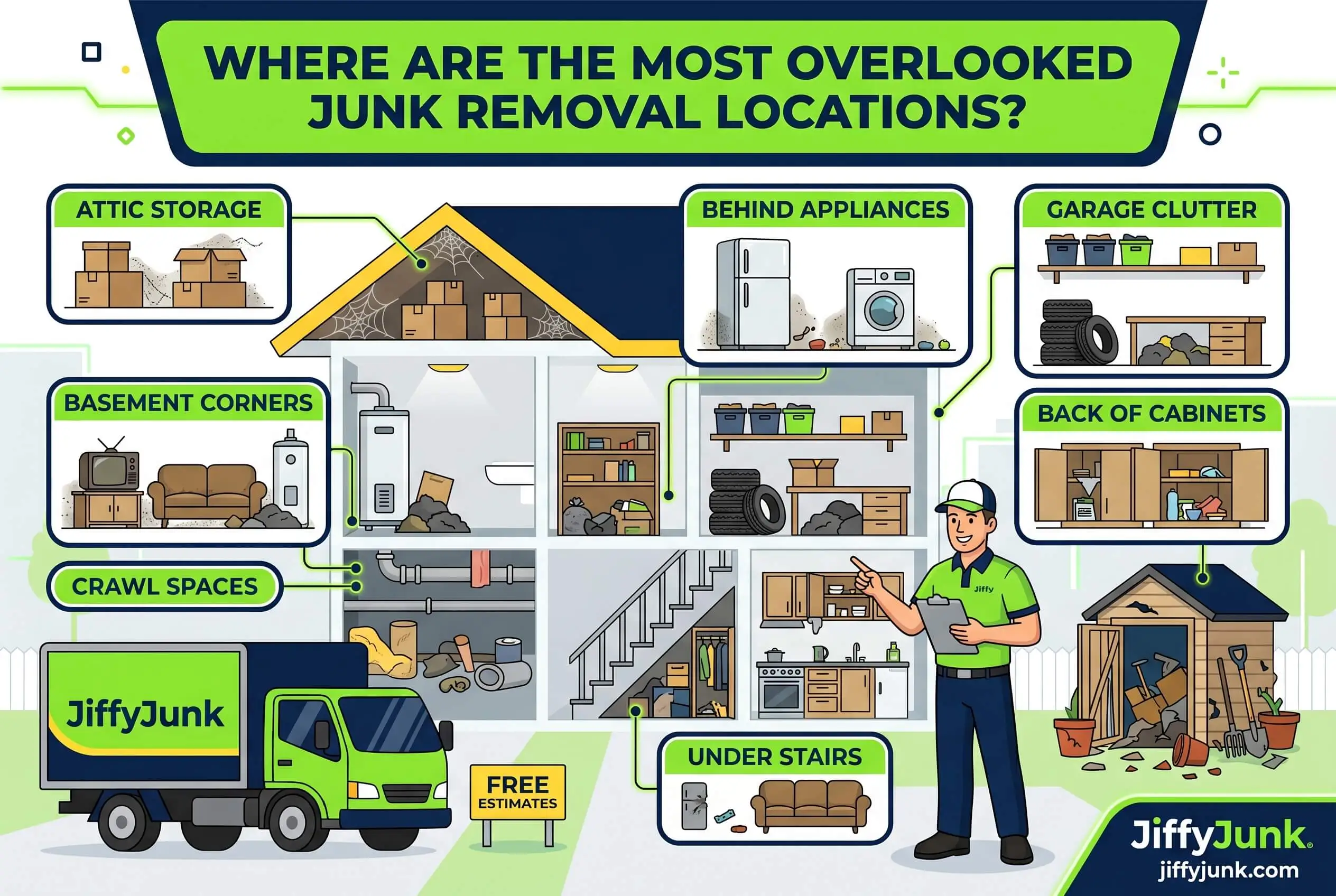
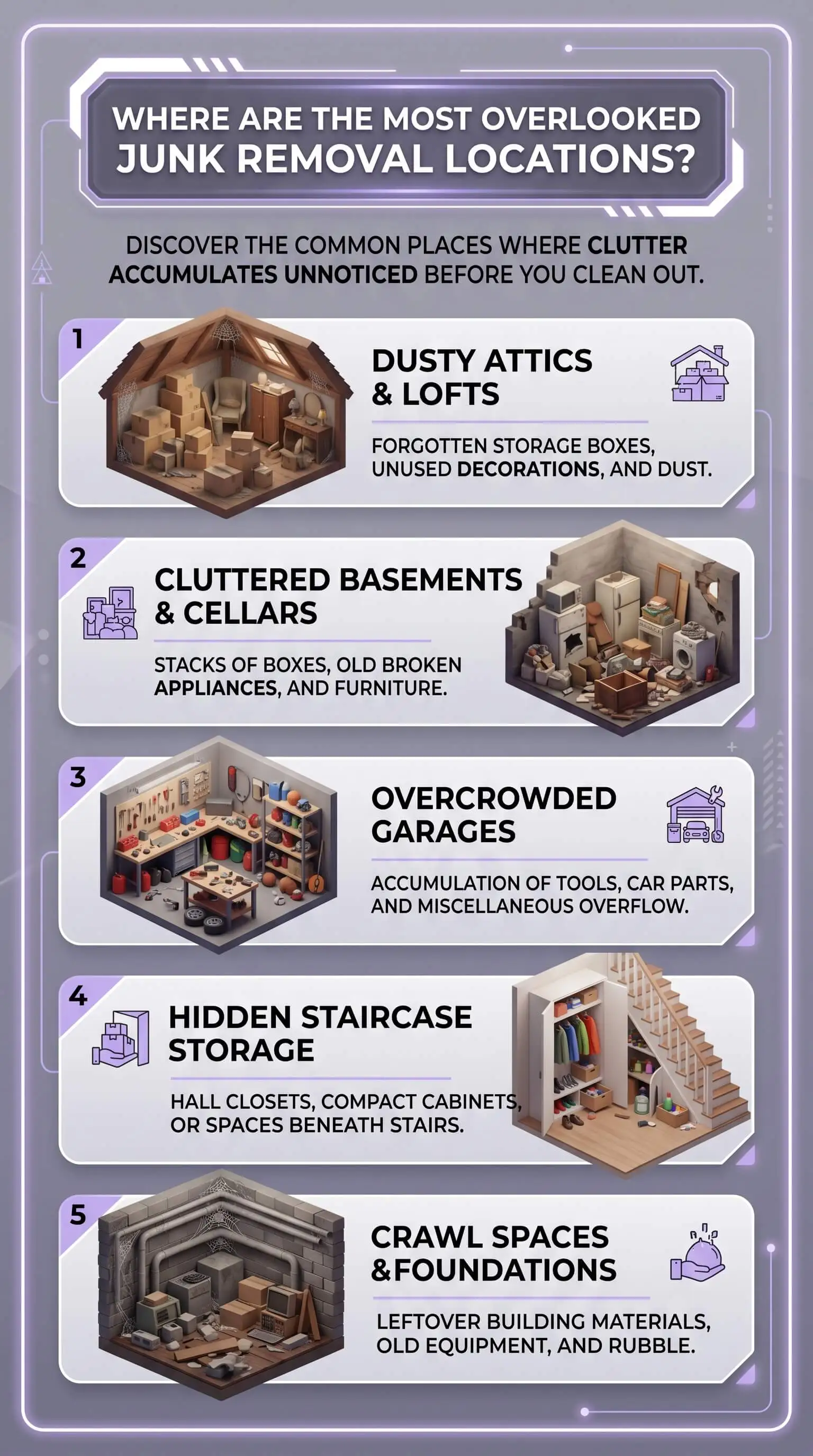
The most overlooked junk removal locations are the hard-to-reach, out-of-sight spots people clear last or skip entirely: attics, crawl spaces, the gaps behind large appliances, sheds, and overhead garage storage. The pattern on almost every job is the same — the heaviest junk hides where you'd rather not look.
Check these before you book a pickup:
Attic — the number one junk trap in most homes
Crawl spaces and under-stair voids — tight, dirty, easy to ignore
Behind and beneath the fridge, stove, and washer
Sheds — and sometimes the leaning shed itself
Garage rafters and overhead racks
Basement corners, side yards, and fence lines
Sweep all of them in one pass, and a full-service crew clears the whole house in a single trip instead of charging you for two.
Top Takeaways
Most “finished” cleanouts still leave junk in a handful of hidden spots, from the attic down to the gap behind the appliances.
These spots stay full because they’re hard or unpleasant to reach, not because anyone’s lazy. The stuff that turns into household waste tends to gather where it’s hardest to get to.
Sorting into keep, donate, and haul before the truck shows up saves you both time and money on pickup day.
The Junk Removal Locations Hiding in Plain Sight
It helps to stop going room by room and start thinking in zones. Junk gathers in the spots you pass every day, the ones you almost never enter, and the corners outside that blend into the yard. Here’s where to look.
Indoor Spots Where Junk Quietly Piles Up
These are the easy ones to miss. You see them every day and stopped noticing them years ago.
Behind and beneath large appliances: Pull out the fridge, the stove, or the washer and you’ll usually find old packaging, dead parts, and things that slid back there and never came out. Nobody wrestles a heavy appliance during a normal cleanout, so the junk just stays.
Overflow closets and spare rooms: The guest-room closet full of broken electronics, tangled cords, and clothes nobody wears isn’t storage. It’s overflow junk that happens to have a door.
Under beds and bulky furniture: Boxes and bags go invisible the day you slide them under the bed. Check under every bed, sofa, and dresser before you call a room clear.
Hidden Structural Areas Most People Skip
These stay full because getting to them is a pain, not because you forgot they’re there.
The attic: This is the top junk trap in most homes. People haul things up to get them out of sight, then never go back. Heat, a tight hatch, and shaky footing keep it that way for years.
Crawl spaces and under-stair voids: Tighter and dirtier than the attic, crawl spaces collect forgotten materials and trap moisture. If you’ve caught a musty smell or signs of pests, buried junk might be part of the reason.
Basement corners and utility rooms: The basement is where the treadmill-turned-coat-rack lives, along with water-damaged boxes and an old appliance or two still waiting on a dump run that never comes.
Outdoor Locations That Add Up Fast
Step outside and the piles keep going, often right in front of you.
Sheds, and the shed itself: A shed fills up with rusted tools, half-empty paint cans, and tired yard gear. Sometimes the shed is the junk, leaning over and eating up yard space you could actually use.
Garage rafters and overhead storage: Look up. Scrap lumber, old tires, and seasonal bins ride the rafters and overhead racks long after anyone needs them.
Side yards, fence lines, and detached structures: Leftover building materials, cracked planters, and yard waste pile up along fences and behind detached garages, blending into the yard until you really look.
What a Junk Removal Pro Wishes Homeowners Knew
After enough cleanouts, the pattern gets obvious. The heaviest, most awkward items almost always sit in the hardest spots to reach, which is exactly why checking them early helps keep your junk removal cost clear, accurate, and easier to plan.
“On nine jobs out of ten, the stuff people forgot about weighs more than everything they remembered. It’s the water heater in the crawl space, the mattress that went up to the attic a decade ago, the engine block behind the shed. Folks clear what they can see and carry, then figure they’re done. The real weight is always in the places they’d rather not go. Before any pickup, open every door and hatch once, even the ones you dread, and write down what’s actually there.”
7 Essential Resources
Once you know what you’re hauling, these help you sort it, give it away, recycle it, or price the job before you call.
What affects a junk removal quote: See how volume, item type, and access move your final price before you pick up the phone.
EPA: Reducing and Reusing Basics: Real ways to donate, repair, and reuse before anything goes to the curb.
EPA: Household Hazardous Waste: How to handle paint, batteries, cleaners, and oils safely instead of tossing them in the trash.
EPA: Electronics Donation and Recycling: Where to send old TVs, computers, and phones for responsible reuse or recycling.
Earth911 Recycling and Donation Search: Search by item and ZIP code to find drop-off and donation spots near you.
Habitat for Humanity ReStore: Donate gently used furniture, appliances, and building materials, with free pickup in many areas.
Goodwill Donation Center Locator: Find a nearby drop-off for usable household goods, clothes, and small electronics.
Supporting Statistics
Here’s how much a single household can pile up, and why so much of it gets forgotten or buried in a landfill.
Americans threw out about 292.4 million tons of municipal solid waste in 2018, roughly 4.9 pounds per person every day, according to the U.S. EPA.
Furniture and furnishings at the end of their life came to about 12.1 million tons in 2018, and roughly 80 percent of it went straight to a landfill, per EPA durable goods data.
The share of U.S. households renting at least one storage unit jumped from 11.1 percent in 2022 to 13.4 percent in 2024, which tells you how much extra stuff homes are holding, based on Self-Storage Association data reported by PwC.
Final Thoughts and Opinion
A real walk-through beats a guess every time. My honest opinion after seeing a lot of these jobs: the people who clear everything in one visit aren’t tidier than the rest of us. They’re just willing to check the spots they’d rather avoid. Open the attic. Crouch into the crawl space. Pull the appliances out once, and actually step inside the shed. The hour that takes almost always costs less than the second pickup you’d book without it. Out of sight is where junk wins, so the fix is simple: go look.
Frequently Asked Questions
What are the most commonly overlooked junk removal locations in a home?
Attics, crawl spaces, basements, sheds, garage rafters, and the gaps behind big appliances top the list. They all share one thing: they’re out of sight or hard to reach, so stuff piles up and stays. Walking each one before a pickup is the easiest way to dodge a surprise second haul.
Why do homeowners forget junk in attics and crawl spaces?
People use those spaces to make things disappear, then avoid going back because the access is awkward and the conditions are rough. Heat, a tight hatch, low headroom, dust, and old heat pumps all kill the urge to return. Out of sight turns into out of mind, and years of stored stuff quietly stacks up.
Do junk removal companies haul items from attics, basements, and sheds?
Full-service crews do. They handle the lifting and carrying from wherever the items sit, attic to backyard, so you don’t have to drag everything to the curb first. Ask whether the company offers full-service removal when you book, and point out the hard-to-reach spots up front.
How should I prepare hidden junk for a pickup?
Walk every zone, inside and out, and jot down what’s there and where. Pull aside anything you want to keep, donate, or recycle. Then clear a path to the awkward spots, like the attic hatch or crawl space door, so the crew can work safely and fast on the day.
Is it cheaper to clear everything in one visit?
Usually, yes. Most junk removal pricing runs on volume and a single trip, so one thorough pickup skips the second trip charge and the repeat minimums. Find every hidden pile before you book, and the crew clears it all at once, which keeps your total lower than splitting the job in two.
Ready to Clear Every Hidden Pile?
Make your list, then book one junk removal service pickup that handles every spot on it, from the attic hatch to the back of the shed. One crew, one visit, and the junk’s gone for good. Walk your home today, mark the spots you’ve been avoiding, and schedule a full-service removal that clears them in a single trip.